Use of Digital Learning tools in schools is expanding, with laptops, tablets and now STEM-based tools. With this expansion the heavy charging carts purchased when schools started laptop programs no longer meet learning needs. Likewise, STEM-based Makerspaces and Innovation Labs have gone beyond community-based programs to schools. With this expansion, schools and students need solutions for powering and charging STEM-tools for collaborative use. In this month’s District Administration news update, “Lockers give way to charging stations,” author Alison DeNisco writes about Albemarle County. These Virginia high schools are removing lockers and replacing them with charging stations and white boards.
It was a pleasure to have occasion to speak with Alison Dinisco about charging solutions that lend themselves to changing digital tool deployments.
And student devices are not the only tools that need power. The national STEM focus continues to grow, with digital learning tools such as robotics, virtual reality devices and 3D printers all needing to connect to an outlet, says Susan Wells, president-elect of the ISTE Mobile Learning Network.
Retrofitting classroom electrical systems is prohibitively costly for most districts. Instead, Wells recommends deploying charging solutions that are mobile and that are able to work with different devices to prepare for future changes in technology.
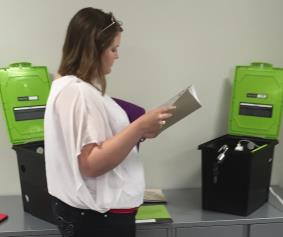
In my TechTerraTM STEM training I use Copernicus Tech Tubs for a digital charge, store and secure solution. I am able to customize the Tech Tubs and transport iPads, laptops, tablets, robots, drones, digital cameras and my 3D Printer. As schools examine ways to provide power to their digital tools, decision-makers must first consider flexibility so that changing program objectives are met.